














Study 1 · Randomized controlled trial (RCT) Strong evidence
Effect of African leafy vegetables on the micronutrient status of mildly deficient farm-school children in South Africa: a randomized controlled study.
van der Hoeven, Faber, Osei, et al. Public health nutrition, 2016.
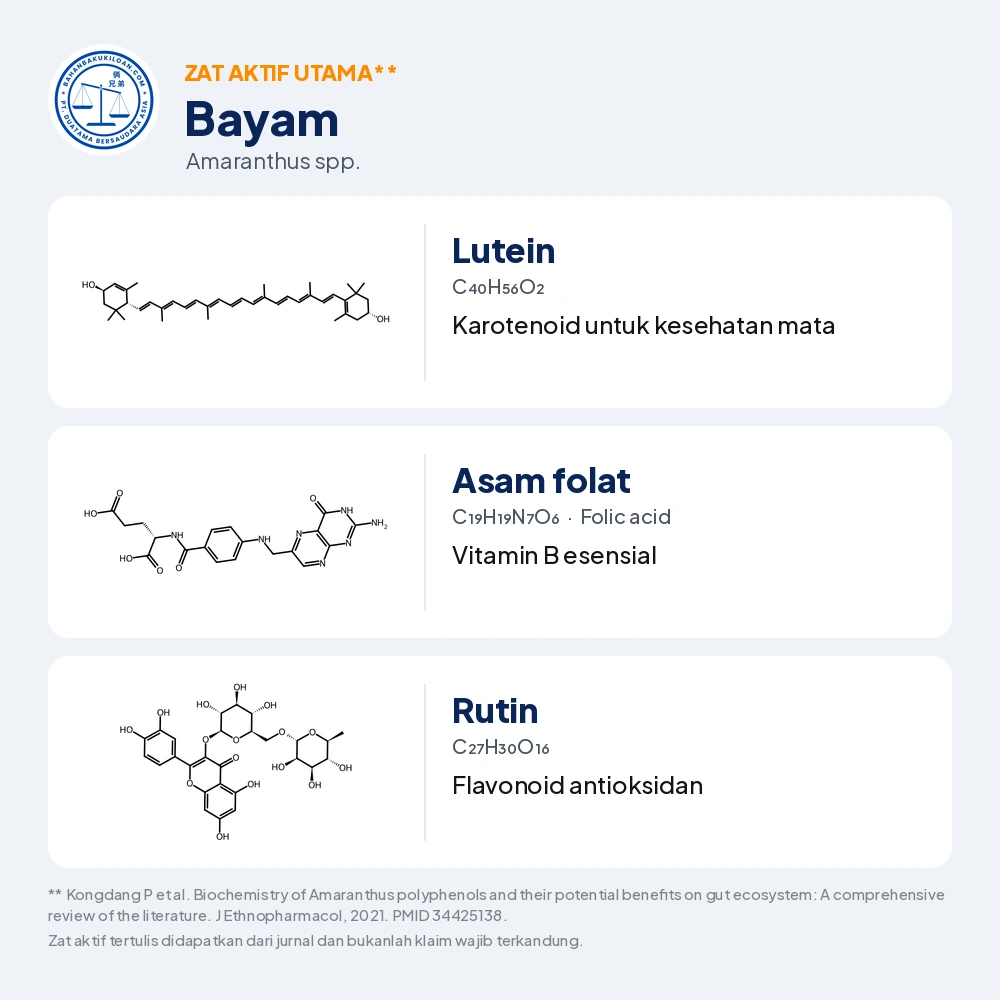
Study design: Randomized controlled trial in children aged 6 to 12 at two farm schools in South Africa. The intervention group (n 86) received 300 g of cooked African leafy vegetables, at least 80% Amaranthus cruentus, five times a week for three months; the control group (n 81) received regular school meals.
Key findings
- One serving of the cooked vegetables provided 11.6 to 15.8 mg of iron and 1.4 to 3.7 mg of zinc.
- At baseline, deficiencies in the intervention group were generally mild, except for zinc (75.6% of children were zinc deficient).
- No significant effects were found on hemoglobin, serum ferritin, serum retinol, or serum zinc.
- The authors concluded that the vegetable did not improve nutritional status when deficiencies were mild.
What it means for your product: Amaranthus leaves are indeed a dietary source of iron and zinc, but this study showed no improvement in blood iron status. It is important to refrain from blood-building claims.


 Ask PIA